Blog
The Art of Resolution: Beyond Being Right


Part Two of a Three-Part Series | George W. Thames
Corporate Leader, Business Owner, Consultant, and Neutral with the Georgia Center for Arbitration & Mediation
Introduction: Beyond Winning the Argument

Successful mediation requires more than determining who is right. It requires understanding, communication, and a willingness to find common ground.
In the first article of our three-part series, we examined why negotiations reach an impasse and how differing perspectives can prevent parties from finding common ground. We considered two ancient Greek concepts, agon and charis, and how they influence the way people approach disagreements.
In this second article, we explore those concepts more closely and consider an important distinction: winning an argument is not necessarily the same as resolving a conflict. Protecting legal rights and obtaining a favorable outcome are important objectives, but a lasting resolution may require something more. Understanding the relationship between competition, fairness, goodwill, and practical necessity can help parties move beyond entrenched positions toward an outcome they can accept.
There is an important distinction between winning an argument and resolving a conflict. The two are not necessarily the same, and in many disputes, the pursuit of one can stand in the way of achieving the other.
The legal profession is trained to identify rights, establish facts, assess liability, evaluate damages, and advocate for the interests of those we represent. These are essential functions of the law and indispensable components of a fair and orderly system of justice. Yet, anyone who has spent meaningful time working through a dispute understands that the legal merits of a position do not always tell the entire story. A party may be legally correct and still find themselves dissatisfied with the outcome. Another may obtain a favorable judgment but remain burdened by the financial, emotional, or practical consequences of the conflict. This is where the Art of Resolution begins.
Two ancient Greek concepts, agon and charis, offer a particularly useful framework for understanding the challenges of conflict and the possibilities of resolution.
The Tension Between Agon and Charis
The first concept, agon, captures the adversarial nature of a conflict and is focused on the contest, struggle, or competition. It postures itself on competing positions, the defense of rights, the assertion of interests, and the desire to prevail. In many respects, our legal system is built around this concept. Parties present competing accounts, advance opposing arguments, and expect a neutral decision-making process to determine which position should prevail.
There is an important place for agon. Rights must be protected. Obligations must be honored. Wrongdoing must be addressed, and those who have suffered harm should not be expected to simply absorb the consequences of another’s conduct. A meaningful resolution cannot stand upon the disregard of legitimate claims or the sacrifice of fundamental fairness.
But agon, when allowed to become the sole measure of success, can also become an obstacle. The contest itself can take on a life of its own. Parties become increasingly invested in defending their positions, proving the other side wrong, or obtaining vindication. What may have begun as a disagreement over a particular obligation, transaction, injury, or misunderstanding can evolve into a struggle over principle, identity, reputation, or control.
The aggression of agon often results in an impasse. The parties may become so focused on what they believe they must win that they lose sight of what they need to resolve.
The second concept, charis, offers an alternate perspective. Associated with goodwill, favor, grace, and generosity, charis introduces a human dimension into the resolution process. It recognizes that the successful resolution of a dispute may require something beyond the assertion of rights and the calculation of competing positions. It may require perspective, flexibility, acknowledgment, and a willingness to consider an outcome that allows everyone involved to move forward.
Charis does not mean surrender. It does not mean abandoning a legitimate claim, excusing misconduct, or asking an injured party to accept less than fairness requires. Nor does it suggest that goodwill alone can overcome every dispute. Rather, it recognizes that the way a conflict is resolved can be as important as the result itself.
The Art of Resolution lies in understanding how these two concepts can coexist. Agon reminds us that rights, interests, and accountability matter. Charis reminds us that resolution requires more than determining who has the stronger argument. It requires consideration of the people, relationships, practical realities, and future consequences involved.
Why Negotiations Become Stuck
Negotiations frequently reach an impasse not because there is no apparent solution, but because the parties are approaching the problem from fundamentally different perspectives. One party may be focused on what it is owed. Another may be focused on what it believes it has already provided. One may be seeking accountability, while another is concerned with limiting exposure. One may want an acknowledgment of wrongdoing, while another sees that acknowledgment as an unacceptable admission. Each may have legitimate concerns, yet neither may fully appreciate what is driving the other side.
Over time, positions become entrenched. A demand becomes a matter of principle. A counteroffer becomes an indication of disrespect. A refusal to compromise is interpreted as bad faith. The financial value of the dispute may become intertwined with personal expectations, business relationships, reputation, or a desire for vindication. This is one reason negotiations can become so difficult.
The parties may be negotiating overstated positions without addressing the interests, concerns, and underlying needs that give those positions their significance. Recognizing this distinction does not require either party to abandon its legal position. It simply creates an opportunity to examine whether there are additional considerations that could lead to a better resolution.
The question changes from, “How do I get the other side to accept my position?” to “What would a fair and workable resolution actually look like?” That is a meaningful shift.
Fairness Requires More Than a Winner and a Loser
A sound resolution must take seriously both sides of the equation: what is owed and what has been lost. Those who are owed something should be treated fairly. Contractual obligations, legal entitlements, financial interests, and legitimate expectations deserve recognition and respect. A resolution that ignores those interests is not necessarily a fair resolution simply because the parties agree to it.
The word “acceptable” is important when considering the outcome of a dispute. Not every injury can be fully reversed. Not every business relationship can be restored. Not every loss can be measured with mathematical precision. But a resolution should strive to address the harm in a manner that is meaningful, reasonable, and fair. This requires looking beyond the simple question of who is right and considering what justice and practicality require under the circumstances.
The objective is not to manufacture a compromise for its own sake. It is to identify an outcome that appropriately respects the rights and legitimate interests of the parties while addressing the consequences of the dispute.
Beyond Being Right
There will always be disputes in which the parties cannot agree, and there will always be circumstances in which a decision must be made by a judge, arbitrator, or other neutral decision-maker. The pursuit and protection of legal rights remain essential. But there is also wisdom in recognizing that the best outcome is not always the one that produces the clearest winner and loser.
Sometimes the greatest victory is not winning the argument. It is finding a way forward. The Art of Resolution is found in balancing the necessary struggle of agon with the grace and goodwill of charis. It is the recognition that fairness requires both respect for what is owed and meaningful attention to what has been lost. It is the willingness to pursue a result that is not merely legally defensible, but workable and acceptable to those who must live with it.
The Role of Mediation: Creating Room for Resolution
Unlike an adjudicative process, mediation does not begin with the assumption that one party must prevail over the other. Instead, it provides a structured opportunity for the parties to examine the dispute, communicate their concerns, evaluate potential outcomes, and consider alternatives that may not be readily available through a traditional adversarial process.
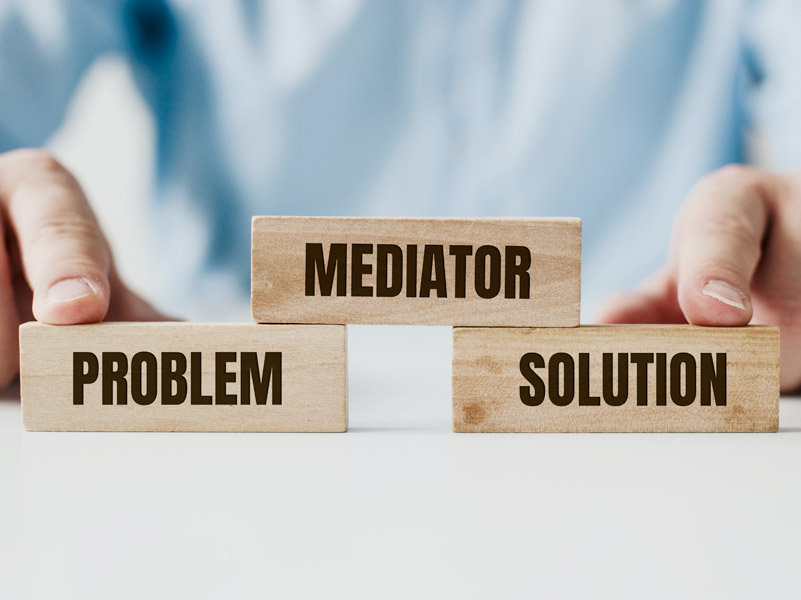
A mediator does not decide who is right or impose a solution. The mediator facilitates the process, helps identify the issues preventing progress, encourages meaningful communication, and assists the parties in evaluating whether a mutually acceptable resolution is possible. And sometimes, the most important contribution a mediator makes is helping the parties recognize that the dispute they came to resolve is not necessarily the only problem they need to address.
Conflict resolution requires understanding human nature, not just understanding the law.
Mediation cannot guarantee an agreement, but it can provide a structured opportunity to explore alternatives that adversarial negotiations may have overlooked.
About This Series
This is the second installment of Beyond Being Right, a three-part series by George W. Thames exploring the human dimensions of conflict and the principles that can help parties achieve meaningful resolution.
Read Part One: Breaking Mediation Impasse
For more information, contact the Georgia Center for Arbitration & Mediation at [email protected].
Additional resources: Harvard Program on Negotiation: Mediation and Conflict Resolution
Reviewed by Mark Cobb, attorney and GCAAM neutral. General information, not legal advice.